shipwrecks.bm
Bermuda · the shipwreck capital of the Atlantic

Wrecks of Bermuda

Five centuries of ships have come to grief on the reefs that ring this small island. Many of them still lie where they fell, in clear, shallow water. This is their story, and a guide to finding them.

Why so many wrecks?

Bermuda is the tip of an extinct volcano in the western Atlantic, about 650 miles from the nearest land at Cape Hatteras. Around the island lies a wide platform of coral reef, the most northerly in the Atlantic, which stretches up to ten miles offshore to the north and west.

For sailors this was the worst of both worlds. The island sits close to the route that ships followed home from the Caribbean and the Americas, riding the Gulf Stream and the westerly winds towards Europe. But the land itself is low and hard to see, while the reefs reach far out to sea, many of them just below the surface. Add the sudden storms and hurricanes of the region and a captain's uncertainty about his longitude, and Bermuda became a trap. Spanish navigators called the islands the Isle of Devils, and gave them a wide berth when they could.

More than three hundred wrecks have been recorded in Bermuda's waters, from Spanish treasure ships and English colonists to Civil War blockade-runners, steamers, and modern ships sunk on purpose as artificial reefs. The water is warm and clear, and many wrecks lie at 20 to 60 feet, which makes Bermuda one of the best wreck-diving destinations in the world.

300+recorded wrecks
45wrecks described here
55sites on our dive map
1609Sea Venture: wreck that founded a colony

A short history of Bermuda and its wrecks

1500s

Discovery and the Spanish treasure route

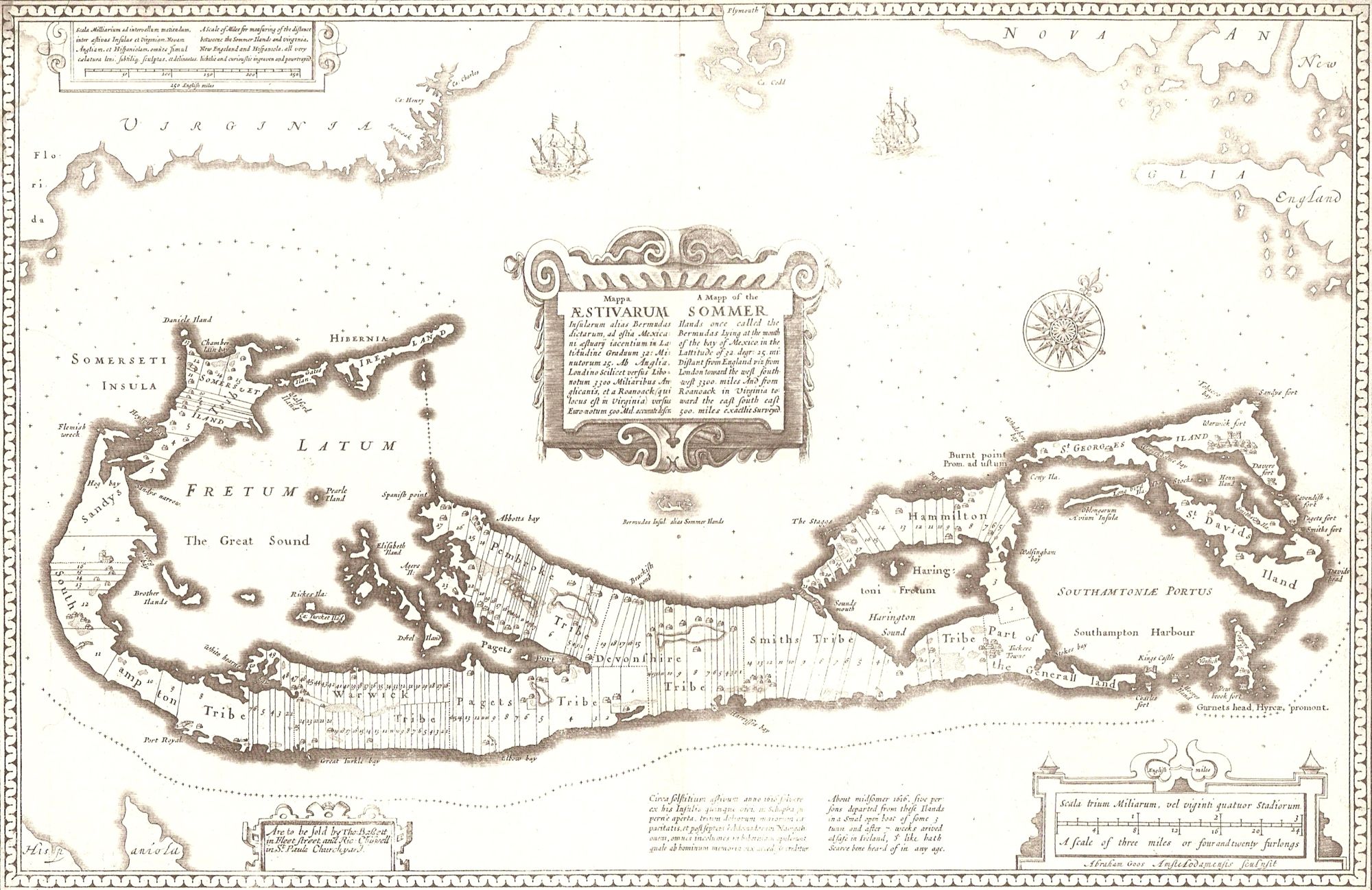
The islands are named after the Spanish captain Juan de Bermúdez, who sighted them in the early 1500s; "La Bermuda" appears on a printed map by 1511. Spain never settled here, but its fleets sailed past every year carrying silver and gold from the Americas, and some did not make it. The San Pedro, lost in the 1590s, gave up one of Bermuda's most famous finds in 1955: an emerald-set gold cross recovered by the Bermudian diver Teddy Tucker. Shipwrecked sailors of several nations were stranded on the islands during this century, and some left their mark: a rock on the south shore carries an inscription dated 1543.

1609

The Sea Venture and the birth of a colony

In July 1609 the Sea Venture, flagship of a fleet taking settlers and supplies to the young English colony at Jamestown, Virginia, was caught in a hurricane. Leaking badly, she was deliberately run onto the reefs off the east end of Bermuda by Admiral Sir George Somers. Everyone on board, around 150 people, got ashore safely. They lived on the island for ten months, built two new vessels, the Deliverance and the Patience, and sailed on to Jamestown in 1610.

The wreck gave England its claim to Bermuda, which was settled in 1612. Accounts of the shipwreck and the survivors' life on an "enchanted" island reached London and are widely thought to have helped inspire Shakespeare's The Tempest. The remains of the Sea Venture were found in 1958 and are a protected historic wreck.

1600s–1700s

The colony and the wreckers

As English settlement grew, so did traffic and losses: the magazine ship Warwick sank in Castle Harbour in 1619 and the Virginia Merchant was lost on the south shore in 1661. Bermudians became expert pilots and salvors, and "wracking" was a recognised way of life: when a ship struck, local boats raced to rescue the crew and salvage the cargo. The Royal Navy frigate HMS Cerberus was lost off the east end in 1783.

1800s

Warships, blockade-runners and steamers

The Royal Navy built its great dockyard at the west end of Bermuda, and the island's strategic value grew. The French frigate L'Herminie was wrecked off the west end in 1838, leaving cannon scattered across the reef. During the American Civil War (1861-65) St. George's became a busy base for fast Confederate blockade-runners carrying arms in and cotton out; the Mary Celestia and the Montana are their best-known remains. As steam replaced sail, iron-hulled steamers such as the Minnie Breslauer, Darlington and Lartington joined the list. In 1896 the Royal Navy deliberately scuttled HMS Vixen across the Daniel's Head channel to block it; her bow still breaks the surface.

1900s

Liners, freighters and The Deep

The twentieth century brought bigger ships and bigger wrecks: the Madiana, Caraquet, and in 1936 the Spanish liner Cristobal Colon, the largest wreck in Bermuda's waters, whose remains are spread across the northern reefs. During the Second World War the schooner Constellation sank on the north-west reefs; her story inspired Peter Benchley's novel The Deep, filmed in Bermuda in the 1970s.

Bermudian divers led the way in finding and studying these sites. Teddy Tucker (1925-2017) spent a lifetime on Bermuda's wrecks and found many of them; his discoveries, including the Tucker Cross, made Bermuda famous in the world of underwater exploration.

Today

Artificial reefs and protection

Since the 1980s several ships have been sunk on purpose as dive sites and artificial reefs, among them the Hermes, the King and the Xing Da. The older wrecks are now protected as part of Bermuda's heritage under the Historic Wrecks Act 2001, and many popular dive sites are marked by buoys with no-fishing zones around them. Read how wrecks are protected →

Find a wreck

Every wreck and dive site on our map: tap a marker for details. Red = wreck, blue = reef site.

Featured wrecks

Stamp and Shipwreck Certificate images courtesy of the Government of Bermuda.

See all 52 wrecks and sites →

Teddy Tucker Bermuda Shipwreck Map
The Teddy Tucker Bermuda Shipwreck Map. Click to enlarge.
Map courtesy of Bermuda Triangle T-Shirts Limited.

Diving the wrecks

Most of Bermuda's wrecks are dived by boat with a local dive operator, who knows the moorings, the currents and the weather. Many shallower sites are also superb for snorkelling. The diving season runs from about April to November, when the water is 72-84°F (22-29°C); winter diving is quieter but the visibility can be outstanding.

Please dive responsibly. Wrecks are fragile and protected: don't touch, don't take, and don't anchor on the reef.

The rules for wrecks and dive sites →