Pelinaion
Lost 1940 - Steel-hulled cargo steamer
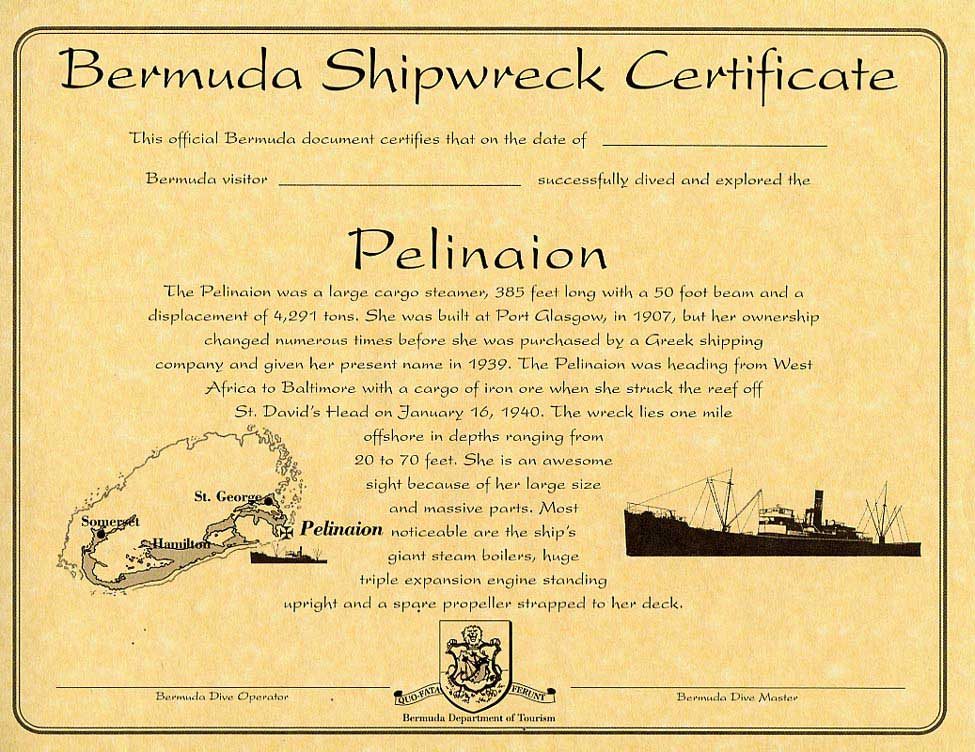
Image courtesy of the Government of Bermuda.
History
The Pelinaion began life in 1907 at Port Glasgow as the Hill Glen, a big tramp steamer of about 4,300 tons and 385 feet. She passed through several owners before a Greek company bought her in 1939 and gave her the name she died under.
In January 1940 she was bound from West Africa to Baltimore with ore. The Second World War was only months old, and Bermuda had extinguished its lighthouses so as not to help German raiders and submarines. Accounts say the captain, Janis Valikos, on what was meant to be his last voyage before retirement, had decided to call at Bermuda for fuel. Without the St. David's light to guide him he misjudged his approach in the dark and drove onto the reef about a mile off St. David's Head on 16 January 1940. The ship broke in two, but all hands got off.
The wreck lies next to the Rita Zovetto, which had run aground in almost the same spot sixteen years before. Like her neighbour, she was worked over for non-ferrous scrap by local salvors after the war.
Diving the wreck today
Often called the best wreck on the East End. The bow sits on the reef at about 30 ft and the wreckage runs down to the stern in sand at 65-70 ft, so it suits both newer divers (shallow end) and experienced divers. Highlights are the huge boilers, the triple-expansion engine still standing upright, deck winches, an anchor and a spare propeller lying on the collapsed deck; a reef tunnel leads under the hull. Grunts, snapper, barracuda and angelfish are common. It is easy to get disoriented in the jumble of steel and reef, and the site is exposed to the open Atlantic, so pick a calm day.
Where it is
Approximate position, for interest only - never use for navigation.
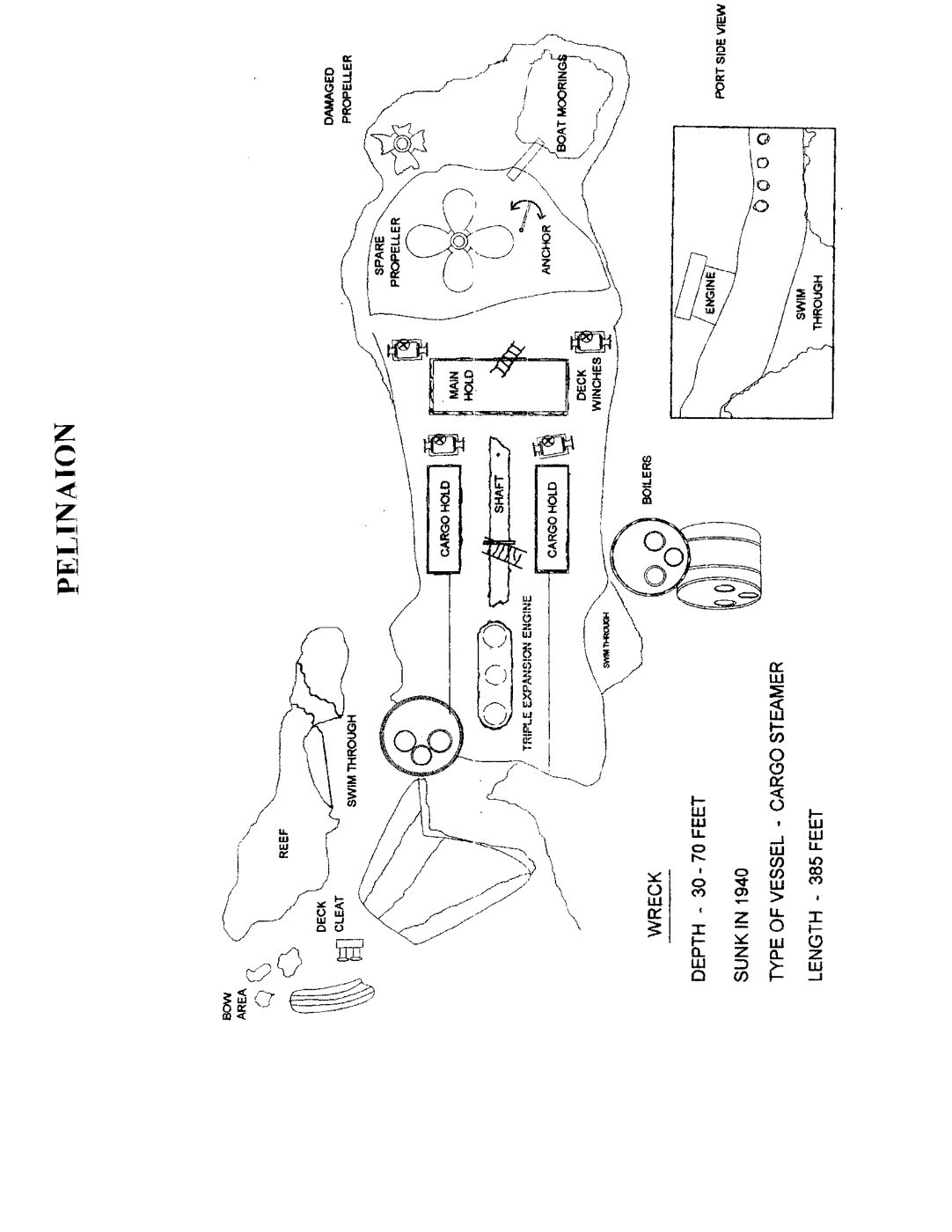 Site plan / diver's sketch of the wreck
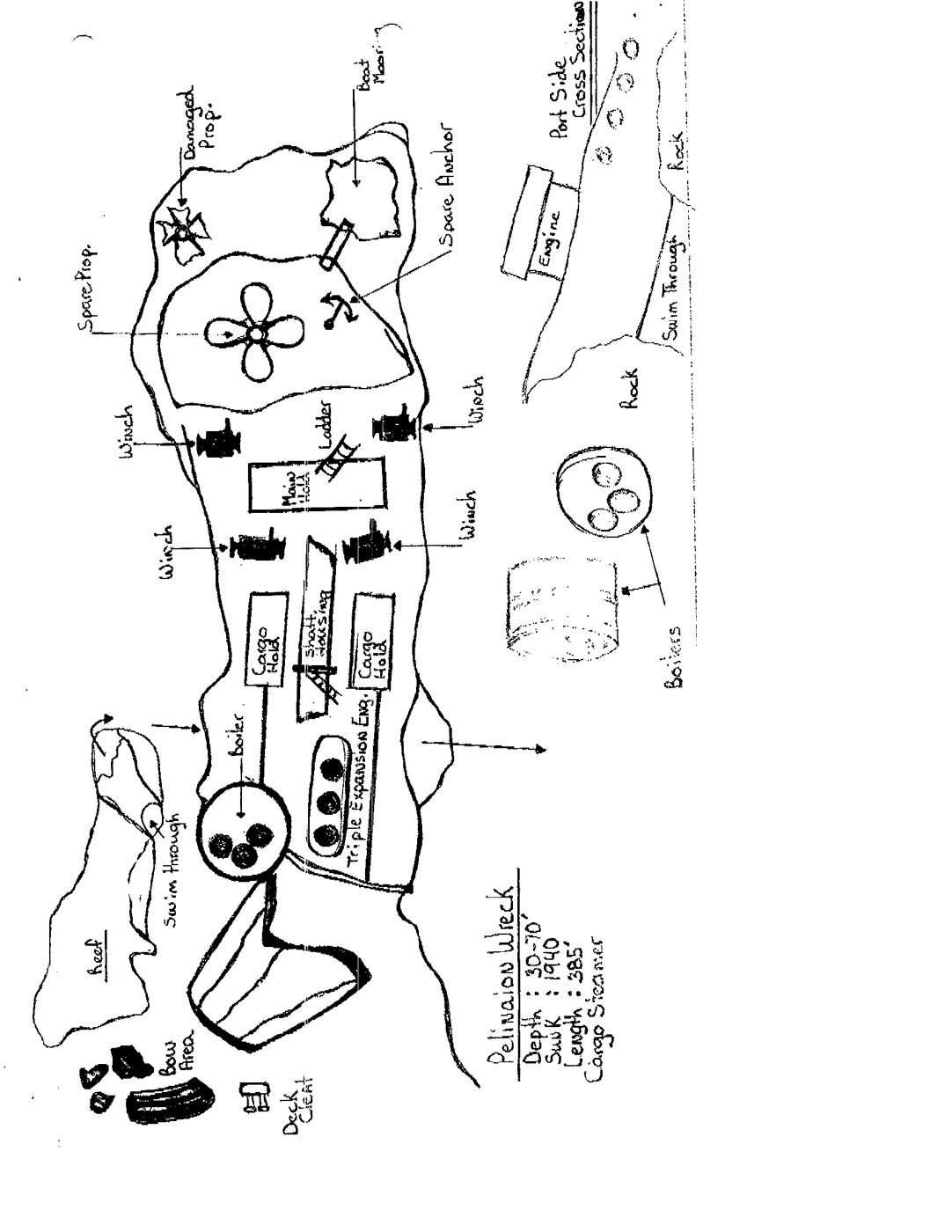 Site plan / diver's sketch of the wreck